First impressions are everything in the world of high-end event planning. The wedding invitation suite is no longer viewed as a simple logistical tool to convey the date and location of a ceremony. Instead, it serves as the initial physical touchpoint of the entire celebration, offering guests a sensory preview of the tone, style, and scale of the upcoming nuptials. Over the past few seasons, traditional paper stationary has faced elegant competition from a modern, architectural alternative: premium acrylic.
Acrylic wedding invitations represent a perfect marriage between contemporary industrial design and classic luxury. These weighty, luminous panels elevate the act of opening mail into a memorable event. As the luxury wedding market shifts toward bespoke storytelling and sensory-rich elements, stationery design has evolved to push the boundaries of what acrylic can achieve. From quiet luxury aesthetics to complex tactile combinations, the latest acrylic invitation trends are redefining modern wedding elegance.
The Shift Toward Frosted Finishes and Quiet Luxury
While high-gloss, crystal-clear acrylic will always maintain a foundational place in modern design, the current luxury landscape is heavily embracing the principles of quiet luxury. The goal is no longer to command attention through blinding reflection, but rather to intrigue through subtle sophistication.
Diffused Elegance via Matte Finishes
Soft frosted finishes have become a dominant choice for affluent couples. By treating the surface of the acrylic to create a matte, velvety texture, designers achieve an invitation that diffuses light rather than reflecting it sharply. This finish softens the industrial nature of the plastic, giving it an ethereal, cloud-like quality that feels exceptionally premium to the touch. The text printed atop a frosted card reads with absolute clarity while maintaining an intimate, understated mood.
Sophisticated Tinted Palettes
The industry is moving rapidly away from exclusively transparent designs, welcoming color in a deeply intentional, muted manner. Tinted acrylic allows couples to introduce their specific wedding palette without being overly literal. The most sought-after hues include:
-
Smoky Grey and Charcoal: Ideal for urban minimalist weddings, offering a dramatic, moody aesthetic.
-
Champagne Beige and Soft Cream: Provides a classic, warm undertone that bridges the gap between traditional paper tones and modern acrylic clarity.
-
Muted Blush and Dusty Blue: Imparts a romantic, timeless softness that shifts beautifully depending on the angle of the light.
-
Sage and Olive Green: Perfect for upscale garden or destination estate weddings, connecting the stationery directly to the natural surroundings.
Architectural Shapes and Organic Contours
For years, the standard rectangular card was the unquestioned norm for wedding stationary. However, modern precision laser-cutting technology has allowed stationery designers to abandon rigid geometry in favor of architectural and organic silhouettes.
Structural Arches and Portals
The arch shape has migrated from wedding ceremony backdrops directly into stationery design. Arch-cut acrylic invitations offer a sense of structural grandeur, mimicking the historic windows of European cathedrals or the sleek lines of mid-century architecture. The curved top softens the rigidity of the plastic material, transforming the invitation panel into a miniature piece of freestanding sculpture that guests are inclined to display on their mantels.
Organic and Asymmetrical Borders
Refining the edges of the invitation is another major hallmark of current design trends. Instead of sharp, ninety-degree corners, couples are opting for gently rounded corners, oval profiles, or entirely asymmetrical silhouettes that mimic raw stones or handmade paper. These irregular forms break the mass-produced feel of synthetic materials, injecting an artistic, tailored personality into the invitation suite.
Multi-Sensory Printing Techniques and Textures
An invitation suite achieves true luxury status when it engages multiple senses simultaneously. The combination of modern printing technology with traditional embellishment techniques allows designers to create incredible depth on a single acrylic panel.
Selective Metallic Foil Stamping
Rather than covering an entire acrylic card in heavy metallic typography, current luxury trends favor extreme restraint. Gold, silver, or rose gold foil stamping is applied selectively to highlight a single critical element, such as a custom minimalist monogram, a thin border frame, or the names of the couple. This contrast between the flat, matte or clear acrylic base and the gleaming, dimensional metallic foil creates a striking visual hierarchy that feels calculated and expensive.
High-Contrast Silk Screening and UV Printing
To maintain readability on clear or tinted backgrounds, opaque silk screen printing and ultraviolet ink curing are highly utilized. Crisp, chalk-white ink applied to dark smoky grey acrylic or deep charcoal text set against a warm champagne frosted background offers exceptional contrast. Designers are layering these techniques, printing delicate botanical patterns or architectural venue illustrations on the back surface of the acrylic while stamping the structural text on the front, resulting in a beautiful three-dimensional parallax effect.
The Unboxing Experience: Boxed Suites and Mixed Media
In the luxury market, an acrylic invitation never arrives in a standard paper envelope. Because of the thickness and structural weight of the material, the presentation mechanism must be equally substantial, turning the unboxing process into a theatrical experience.
Handcrafted Velvet and Silk Box Enclosures
To protect the pristine surfaces of the invitations during transit, they are frequently nestled into custom-fabricated presentation boxes. Rigid cardboard structures are wrapped tightly in premium Italian velvet, raw Thai silk, or heavy linen. The interior of the box features a custom die-cut well that holds the acrylic panel securely in place. When a guest removes the lid, the heavy, cool-to-the-touch invitation is elevated directly out of its soft, opulent bedding.
Vellum Wraps and Custom Wax Seals
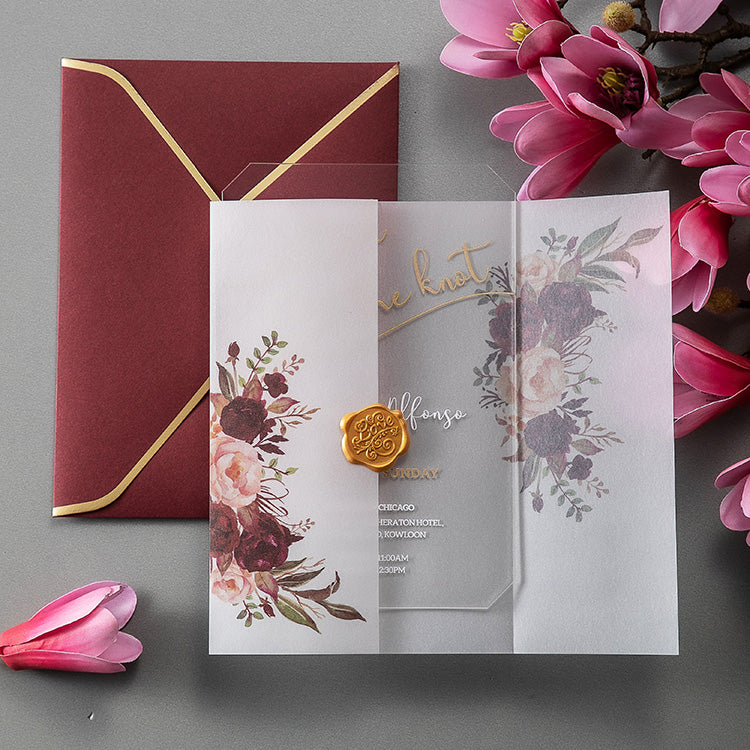
For couples desiring a subtle nod to classic tradition, wrapping the acrylic panel in a translucent sheet of heavy metallic vellum provides a wonderful layering element. The vellum wrap is secured with a bespoke wax seal featuring the couple’s custom family crest or modern initial emblem. The contrast between the fragile, paper-like vellum, the heavy wax, and the solid, permanent acrylic sheet underneath creates an exquisite tactile journey for the recipient.
Typography as the Hero Element
As decoration overload recedes from the luxury event sphere, typography has stepped into the spotlight as the primary design driver. Minimalist layouts featuring massive amounts of negative space allow the innate beauty of the acrylic material to act as a core component of the aesthetic.
Refined Serif and Elegant Calligraphy Fusion
The prevailing typographic trend involves pairing ultra-clean, widely spaced modern serif fonts with incredibly delicate, flowing handwritten script. The clean font structures ensure the logistical details remain perfectly legible against the transparent or frosted background, while the sweeping calligraphy adds human warmth and romance. The text is aligned thoughtfully, often pushed entirely to one side or centered with extreme intentionality, conveying the confident elegance of a modern art gallery program.
Frequently Asked Questions
What thickness of acrylic is standard for a luxury wedding invitation suite?
Luxury invitations typically utilize acrylic panels ranging from one millimeter to three millimeters in thickness. Two millimeters is widely considered the industry sweet spot, as it provides a substantial, rigid weight that feels undeniably premium in the hand without creating excessive bulk that complicates packaging and postal logistics.
How do acrylic invitations affect the cost of postage and mailing?
Due to their weight and non-pliable nature, acrylic invitations cannot be processed through standard automated postal sorting machinery. They must be hand-cancelled and require parcel rates rather than standard letter postage. It is essential to work closely with your stationery designer to weigh the complete boxed suite early in the process so accurate mailing budgets can be calculated.
Can guests easily recycle acrylic wedding invitations if they choose not to keep them?
Many luxury acrylic invitations are crafted from high-grade acrylic resins that can technically be processed by specialized recycling facilities. However, because they are deeply customized with foil stamping, UV inks, and silk screening, they are generally classified as keepsake items. Most guests retain these permanent, durable panels as beautiful mementos of the celebration long after the wedding day has concluded.
How do you prevent clear acrylic invitations from scratching during transit?
To prevent surface abrasions caused by friction during shipping, designers place protective layers within the suite. This includes nesting the invite inside a fitted velvet well, wrapping the individual panel in smooth vellum paper, or applying a micro-thin, peelable protective film to the back of the clear acrylic, which is removed just prior to the final assembly of the suite.
Are acrylic invitations suitable for traditional or ultra-formal destination weddings?
Absolutely. Acrylic can be adapted to any style narrative through the choice of embellishments. By pairing a frosted white acrylic panel with traditional script typography, classic gold foil borders, and a formal navy velvet box enclosure, the look remains completely timeless and appropriate for a black-tie cathedral or historic estate wedding.
What is the ideal lead time required for ordering custom acrylic stationery?
Because acrylic invitations require complex laser cutting, specialized chemical printing, and custom-built box fabrication, the production timeline is significantly longer than paper printing. It is highly recommended to finalize the design and initiate production at least four to six months before your scheduled mailing date to allow for meticulous quality control and seamless assembly.